
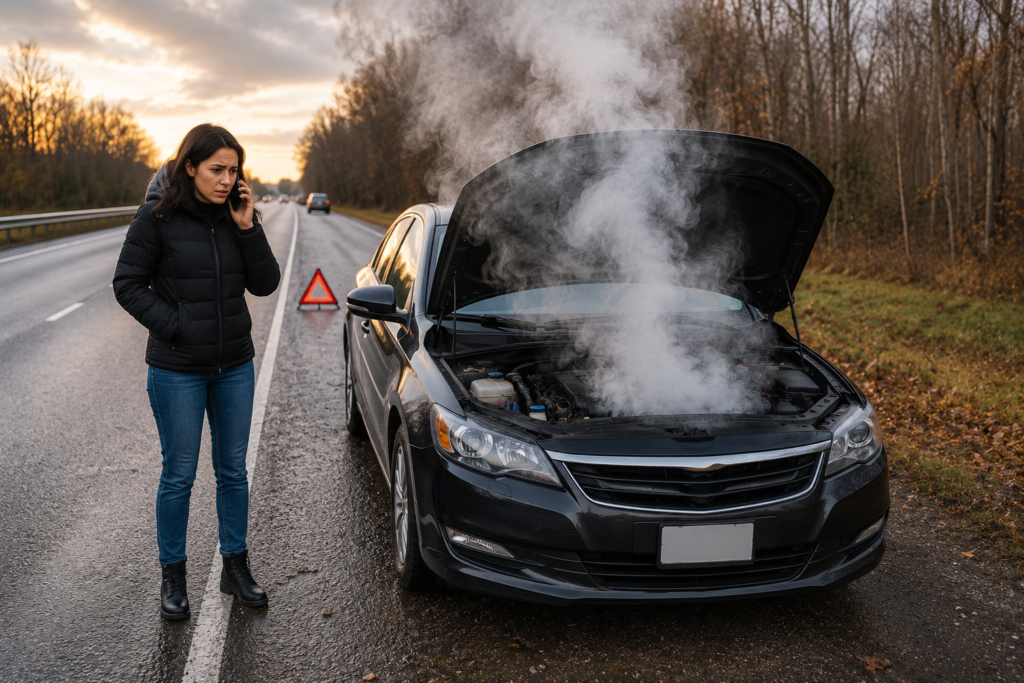
The temperature outside is climbing, traffic is backed up, and your temperature gauge is creeping into the red. Sound familiar? Summer is tough on vehicles, and an overheating car is one of the most common and most preventable roadside emergencies of the season.
Heat puts extra strain on your cooling system, and when that system can’t keep up, your engine pays the price. An overheating car can go from a minor warning to a full breakdown fast, sometimes in just a few minutes. Knowing what causes it, what signs to watch for, and how to respond can mean the difference between a quick fix and a costly repair.
Why Is My Car Overheating in the Summer?
Your engine produces a lot of heat on its own. Under normal conditions, your cooling system pulls that heat away, allowing the engine to operate at the proper temperature. But when outside temperatures are already high, the system has to work harder to do the same job.
Several factors make car engine overheating more likely in summer:
- High ambient temperatures make it harder for the radiator to release heat into the surrounding air, especially when that air is already hot.
- Stop-and-go traffic reduces airflow through the front of the vehicle, which the radiator depends on to stay cool.
- Air conditioning adds extra load to the engine, generating more heat while the cooling system is already under pressure.
- Long drives give problems like low coolant or a weak water pump more time to catch up with you.
None of these on their own will necessarily cause a breakdown. However, combine a few of them on a hot day with existing cooling system issues, such as low coolant due to evaporation, a leak, or a failing component, and you have a problem.
Most Common Causes of Car Engine Overheating
Most cases of car engine overheating come down to a cooling system that is not doing its job. There are a handful of common causes for this.
Low or Leaking Coolant
Coolant absorbs heat from the engine and carries it to the radiator. If your coolant level is low due to a slow leak or general neglect, there is not enough fluid to move heat away. This is the most common cause of overheating and one of the easiest to catch with regular under-hood checks.
A Failing Thermostat
The thermostat controls when coolant flows from the engine to the radiator. If it gets stuck in the closed position, the coolant stops circulating, and temperatures rise quickly. A bad thermostat can cause an overheating car even when coolant levels look perfectly fine.
Radiator Problems
The radiator is where heat leaves the coolant and gets released into the air. If it is clogged, corroded, or blocked, it cannot do that job well. Radiator issues tend to get worse in summer when the system is under more stress.
A Worn Water Pump
The water pump keeps coolant moving through the engine and radiator. When it starts to wear out, circulation slows or stops. Without proper flow, heat builds up quickly, especially on hot days with little margin for error.
What Are the Warning Signs of an Overheating Car?
Your car will usually give you signals before things get serious. The key is knowing what to look for so you can pull over before damage is done.
Common warning signs of car overheating include:
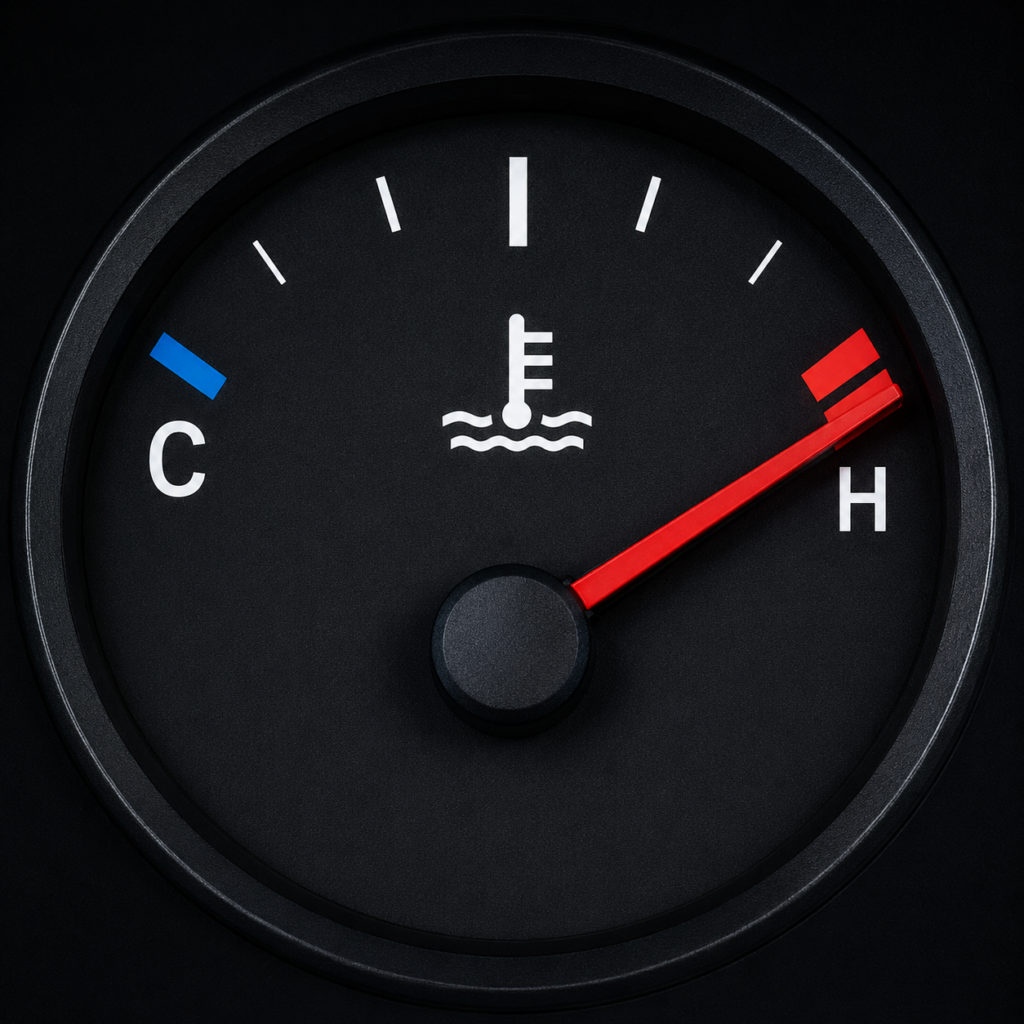
- The temperature gauge is rising toward the red zone or the “H” mark
- Steam or smoke coming from under the hood
- A sweet, syrup-like smell that may indicate burning or leaking coolant
- The engine feels sluggish or is losing power
- A dashboard warning light, often shaped like a thermometer
If you notice any of these, do not ignore them. Continuing to drive an overheating car can warp the cylinder head, damage gaskets, or seize the engine, all of which lead to expensive repairs or a tow.
What Should You Do If Your Car Starts Overheating?
Knowing how to react is just as important as knowing the warning signs. Here’s what to do if you find yourself with an overheating car on the road.
Turn Off the AC and Turn On the Heat
It sounds strange, but turning off the air conditioning right away reduces the load on your engine. Turning the heater on full blast pulls heat away from the engine and into the cabin, which can buy you a little extra time.
Pull Over Safely
If the temperature gauge keeps rising, get off the road as soon as it is safe. Find a parking lot, a shoulder, or any spot away from traffic. Turn the engine off and let it cool for at least 15 to 20 minutes before opening the hood.
Do Not Open the Radiator Cap When the Engine Is Hot
A hot radiator cap contains pressurized steam and coolant, which can cause serious burns if released. Wait until the engine has cooled completely before checking the coolant level or adding any fluid.
Call for Help If You Need It
If the car will not cool down, if you are stuck on a highway, or if you are unsure of the cause, the safest course of action is to call for roadside assistance. Trying to push through with an overheating engine almost always makes things worse.
How Can You Prevent Car Overheating?
A little preparation goes a long way. Most cases of car overheating are preventable with basic maintenance before the hottest months arrive.
Steps worth taking before summer:
- Check your coolant level and top it off if needed. If it has been more than two years, consider a full coolant flush.
- Inspect hoses and belts for cracks, soft spots, or wear that could lead to a failure on the road.
- Have the thermostat and water pump checked if your car has high mileage or has not been serviced in a while.
- Make sure your radiator is clean and free of debris, especially if you do a lot of highway driving.
- Keep an eye on your temperature gauge while driving in hot weather so you catch any changes early.
Taking these steps before summer is much easier and less expensive than dealing with a breakdown on the side of the road in July.
Stuck on the Road? Accurate Towing Has You Covered
When an overheating car leaves you stranded, we are ready to help. At Accurate Towing, we offer fast, reliable towing services and roadside assistance throughout New Jersey, 24 hours a day, 7 days a week. Whether you need a tow to a repair shop or just need to get safely off the road, our team is equipped and ready to respond whenever you need us. Do not risk further engine damage by waiting or trying to drive it out. When your car overheats and you are not sure what to do next, contact us, and we will handle the rest.

Overheating Car FAQs
How do I know if my car is overheating?
The most common signs are a rising temperature gauge, steam from under the hood, or a dashboard warning light. A sweet, burning smell can also indicate coolant leaking or burning off. If you notice any of these, pull over safely as soon as you can.
Can I keep driving if my car starts to overheat?
No. Even a short drive with an overheating car can cause serious engine damage, including warped heads, blown gaskets, or a seized engine. Pull over, turn the engine off, and let it cool before doing anything else.
What should I add to a car that is overheating?
Once the engine has fully cooled, you can add coolant to the reservoir if the level is low. Never open the radiator cap while the engine is still hot. Pressurized steam can cause burns and sudden coolant loss.
Does summer heat alone cause car engine overheating?
High temperatures make the cooling system work harder, but heat alone usually does not cause a breakdown. It tends to expose existing problems, such as low coolant or a worn thermostat, that might not cause issues in cooler weather.
How long does it take for an overheated engine to cool down?
It typically takes 15 to 30 minutes for an engine to cool enough to be inspected safely. The exact time depends on how hot it gets and the outside temperature. Do not rush this step, as opening the hood too soon can be dangerous.
Does roadside assistance cover a car that has overheated?
Many plans cover towing if your car cannot be driven, but they may not cover repair costs. If you are stuck because your car overheated, a towing service can at least get you to a shop safely.