When a large commercial truck breaks down or is involved in an accident, getting it off the road and to the right destination requires more than a standard tow. Emergency roadside truck service requires specialized equipment, careful planning, and experienced professionals. For companies that rely on a single truck or a fleet, knowing what to expect can make an unexpected roadside situation easier to manage.
Towing a Large Truck vs Towing a Car
A passenger vehicle can often be handled with a conventional tow truck and standard towing equipment. Large commercial trucks require different equipment because of their size, weight, configuration, and the conditions surrounding the incident.
Size and Weight
Commercial trucks can weigh significantly more than passenger vehicles, particularly when equipment, trailers, or cargo are involved. Before moving a truck, the towing provider must understand the vehicle’s configuration and condition to choose the right equipment and recovery method.
Using equipment that isn’t designed for towing large trucks can create unnecessary safety risks or cause additional damage. Heavy-duty towing requires equipment that can handle the truck’s specific requirements.
Specialized Equipment
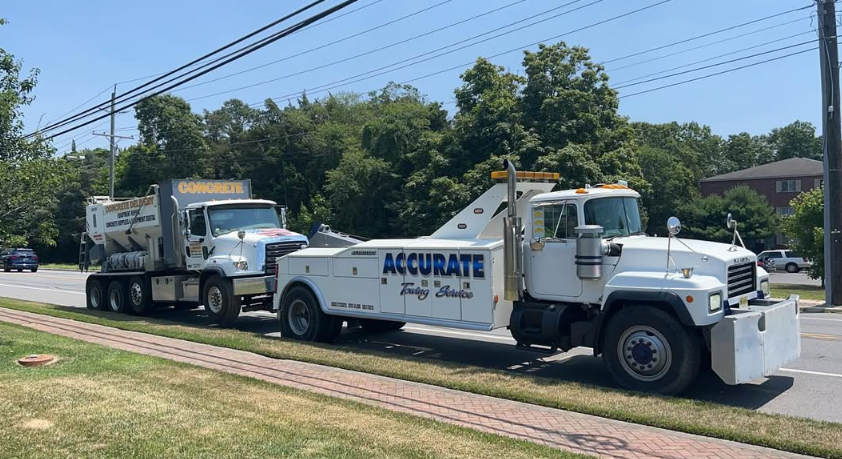
Large trucks may require heavy-duty wreckers, specialized towing attachments, or recovery equipment that is not used for everyday passenger-vehicle towing. The appropriate setup depends on the type of truck, its condition, and how it needs to be moved.
The towing process may also differ depending on whether the truck is involved in a mechanical breakdown, collision, or recovery situation. A provider experienced with commercial vehicles can evaluate those factors before beginning the tow.
Safety Planning
The size of a commercial truck also affects how it is positioned, connected, loaded, and transported. Road conditions, traffic, the truck’s location, and any damage to the vehicle all need to be considered.
This attention to detail is important because protecting the truck is only part of the equation. The towing process also needs to account for the safety of the driver, other motorists, and anyone working around the vehicle.
What’s Involved in Emergency Roadside Truck Service?
When a call comes in for emergency roadside truck service, the first step is to determine what happened and what’s needed to safely move the vehicle. The towing provider can then select the appropriate equipment and recovery approach.
Assessing the Truck and Situation
The towing team will need information about the truck and its location. Details such as the vehicle’s size and configuration, whether it is loaded, the type of incident, and whether there is visible damage can help determine how to handle the response.
Road and traffic conditions may also affect the recovery plan. Accurate information when making the call helps the towing company arrive prepared with the right equipment.
Determining the Recovery Method
Not every commercial truck requires the same towing process. A mechanical breakdown may call for a different approach than a collision or recovery operation.
The truck’s condition will also determine how it can be connected and moved. In some situations, additional recovery equipment may be necessary before transportation can begin.
Loading and Securing the Vehicle
Once the appropriate method is established, the truck is connected and secured properly for movement. Commercial vehicles require careful handling because of their weight and dimensions.
Proper securement reduces the risk of movement during transport and helps protect the truck from unnecessary damage.
Transporting the Truck
After the truck has been safely prepared, it can be transported to the appropriate destination. Depending on the circumstances, that could be a repair facility, business location, or another designated site.
For commercial operators, clear communication about the destination helps keep the process organized and reduces unnecessary delays.
Common Emergency Situations
Large commercial trucks may require specialized towing or recovery following several types of roadside incidents. Some of the most common include:
- Mechanical breakdowns: Engine, transmission, electrical, or other mechanical problems can leave a commercial truck unable to complete its route.
- Accidents and collisions: A truck involved in a crash may require specialized recovery equipment, particularly when the vehicle has sustained significant damage.
- Recovery situations: Some roadside incidents require more than a standard tow, so specialized recovery equipment and trained personnel are necessary.
Because these situations can vary significantly, the towing provider should have the equipment and experience to assess the circumstances before moving the vehicle.
Why Experience is Important
Choosing a towing company with experience handling commercial trucks can make a significant difference during an emergency. Large vehicles require different equipment and procedures than passenger cars, and using the wrong towing method can cause additional damage or create a safety hazard.
An experienced provider evaluates the situation and the factors to consider to safely manage the recovery and transport process. Training and certification are also important considerations when choosing a company to handle valuable commercial equipment.
For businesses, working with a provider that has emergency roadside truck service experience can also mean less uncertainty during an already disruptive situation. Having a towing provider familiar with large trucks can help the company coordinate the response and determine the next steps for the vehicle.
What to Do While Waiting for a Towing Company
While waiting for emergency roadside truck service, truck operators should prioritize safety and provide the towing company with as much useful information as possible. If the truck can be moved to a safe location without creating additional risk, doing so may help reduce exposure to passing traffic.
Drivers should also remain aware of surrounding traffic and use appropriate warning measures. When speaking with the towing provider, they should be prepared to share the truck’s location, type, condition, and details about what occurred.
Attempting a recovery or repair without the appropriate equipment can create additional hazards. When a situation requires specialized towing, it is generally best to leave the recovery work to trained professionals with the equipment to handle it.
Professional Emergency Roadside Truck Service
Accurate Towing Service provides emergency roadside truck service for businesses and truck operators throughout New Jersey. We handle trucks of all sizes and provide towing, hauling, repair, and recovery services.
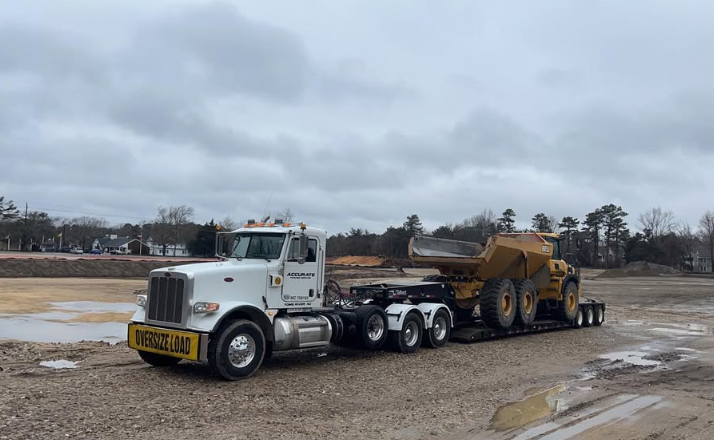
Our drivers are trained and certified in towing and recovery, while our fleet includes specialized heavy-duty towing equipment such as Landolls, Lowboys, and flatbed trailers. Accurate Towing also provides emergency recovery, roadside assistance, heavy hauling, and auto and truck repair.
Available 24/7, Accurate Towing Service can help businesses respond when a large commercial truck needs professional towing or recovery. With the right equipment and experienced personnel, the goal is to safely move the vehicle and help your company determine what comes next. Contact us for emergency service or to learn more about our fleet maintenance services.
Emergency Roadside Truck Service FAQs
What is emergency roadside truck service?
Emergency roadside truck service provides specialized towing and recovery assistance for large commercial trucks that standard passenger-vehicle towing equipment can’t handle safely.
How is towing a commercial truck different from towing a car?
Commercial trucks are significantly larger and heavier and may require specialized wreckers, towing attachments, or recovery equipment based on their configuration and condition.
What information should a company provide when calling for truck towing?
Useful information includes the truck’s location, size and configuration, whether it is loaded, its condition, and what happened.
Can the same towing equipment be used for every commercial truck?
No. The appropriate equipment and towing method depend on the truck’s size, configuration, condition, and the circumstances surrounding the incident.
Why is proper securement important when towing a large truck?
Proper securement helps keep the vehicle stable during transportation and reduces the risk of unnecessary damage or additional safety hazards.
Does Accurate Towing Service provide commercial truck towing?
Yes. Accurate Towing Service handles trucks of all sizes and provides towing, hauling, repair, and recovery services throughout New Jersey.
Is Accurate Towing Service available for emergencies?
Yes. Accurate Towing Service provides towing and recovery services 24/7.